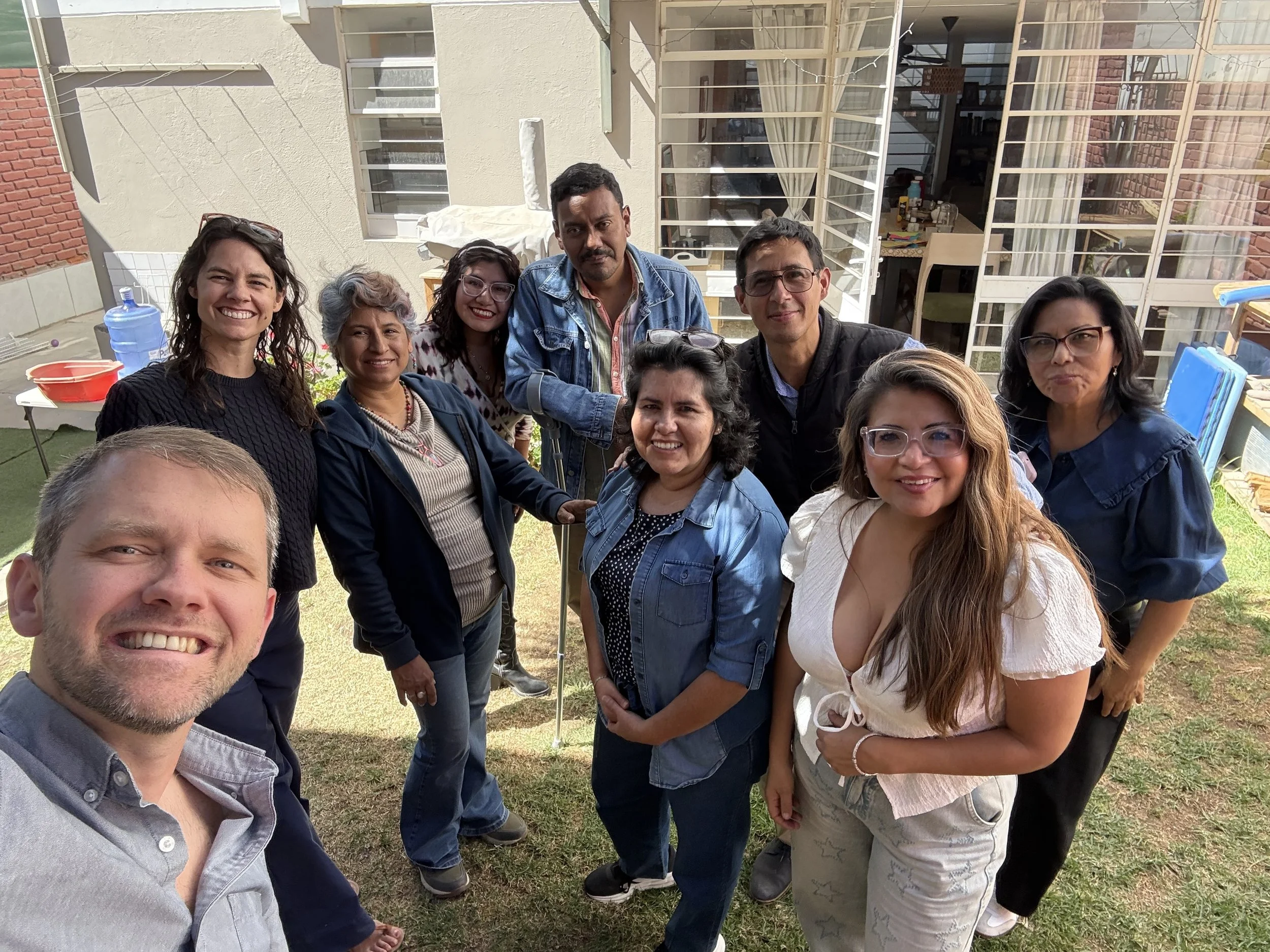
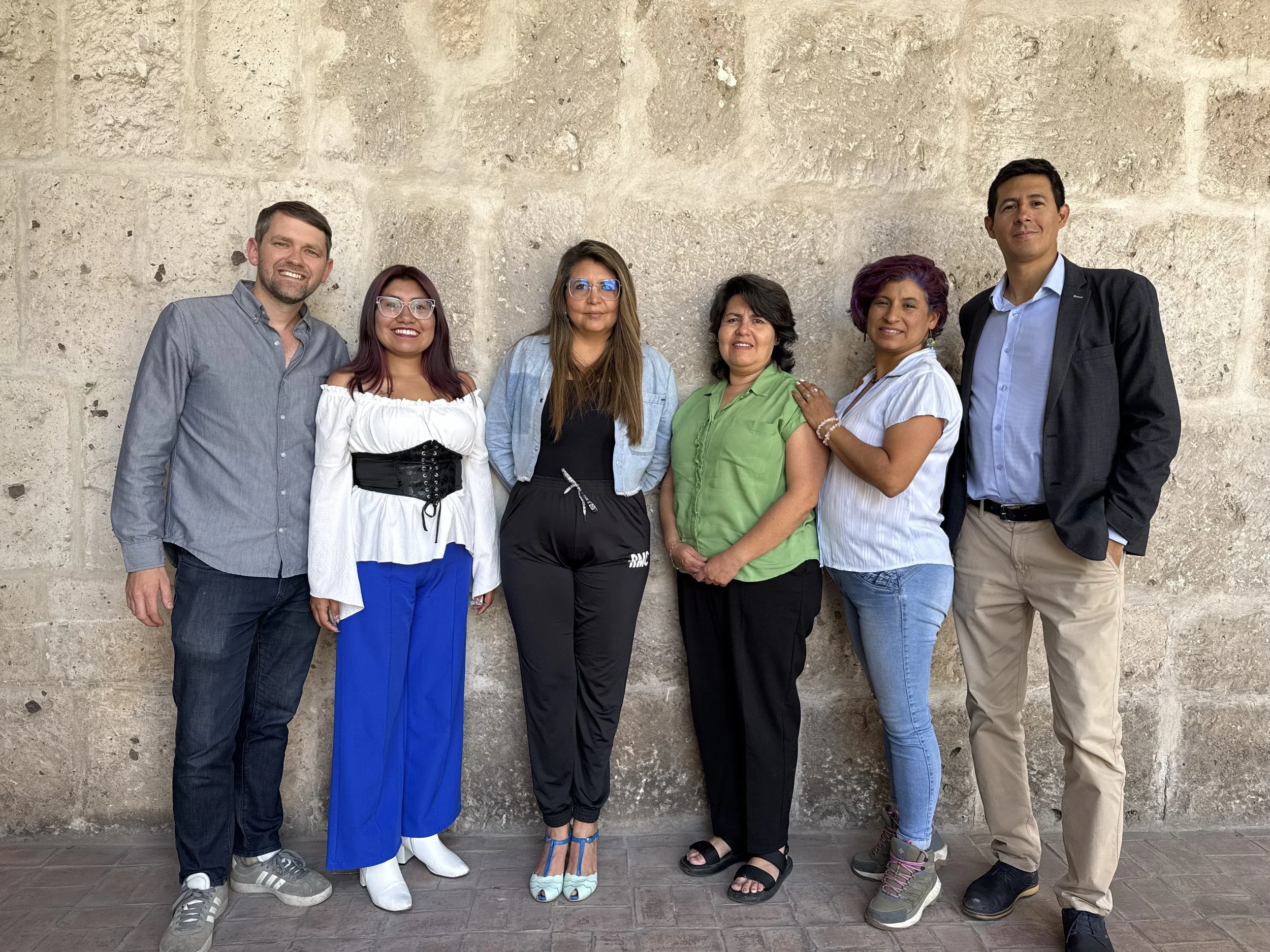
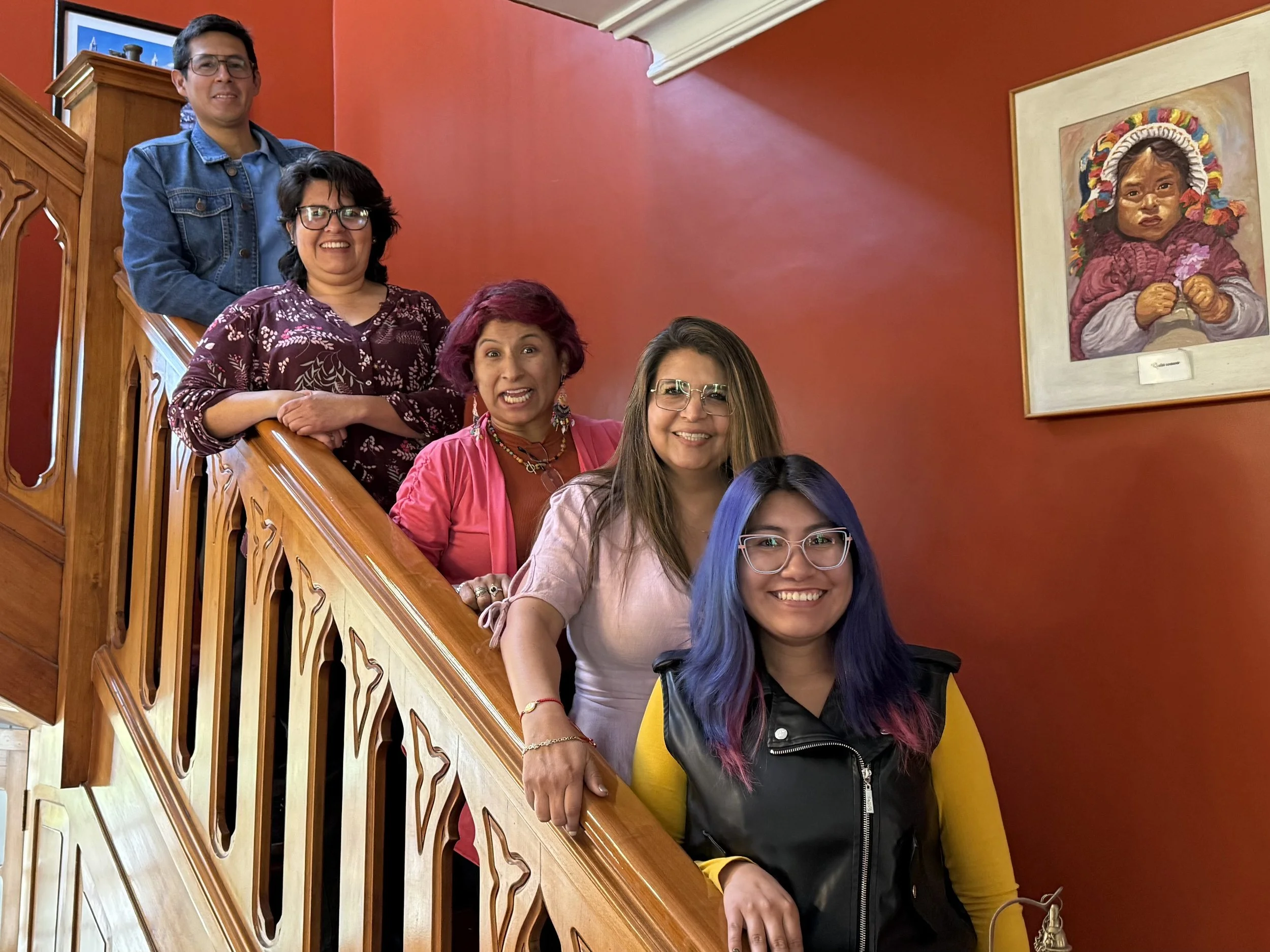
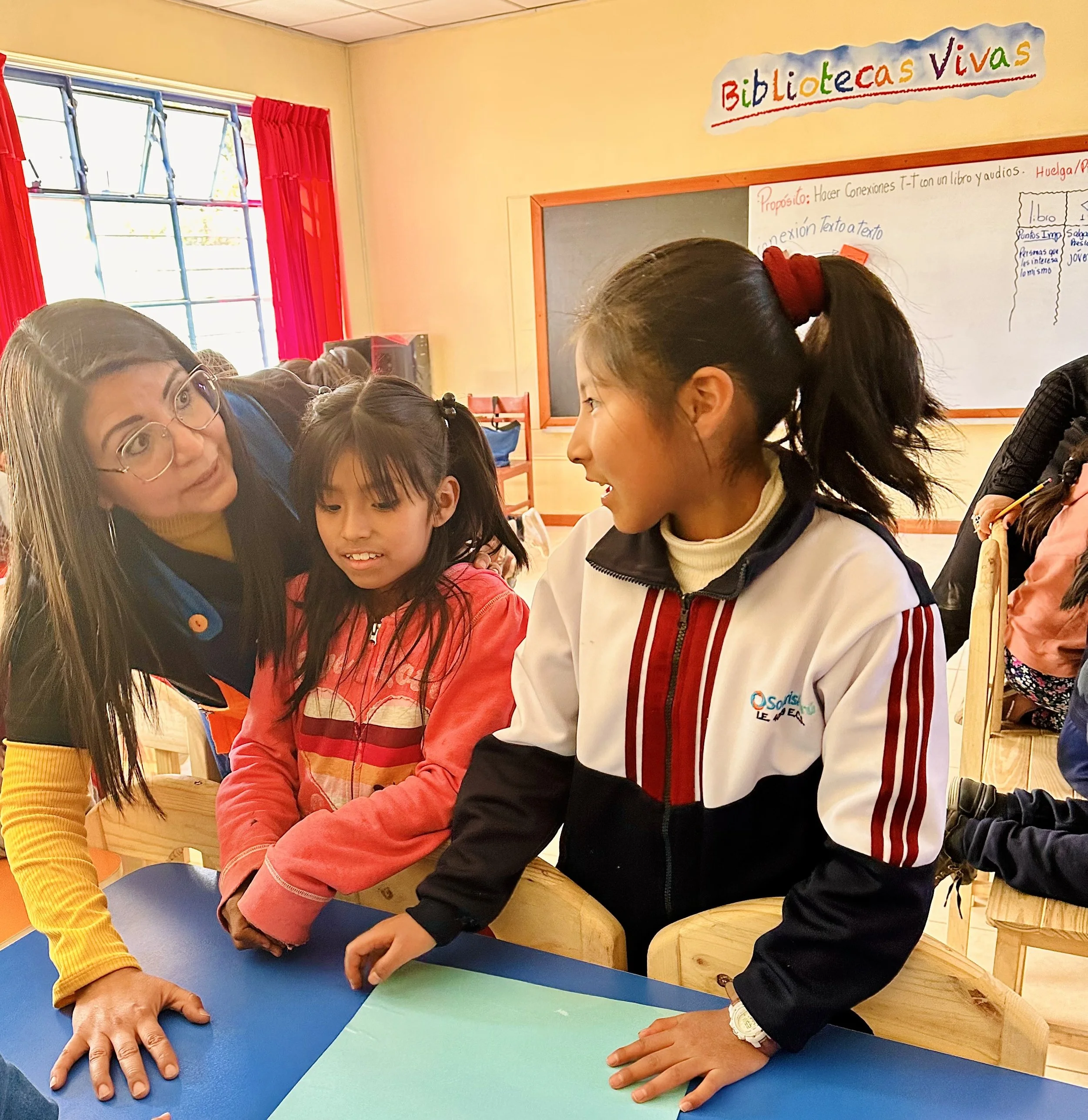
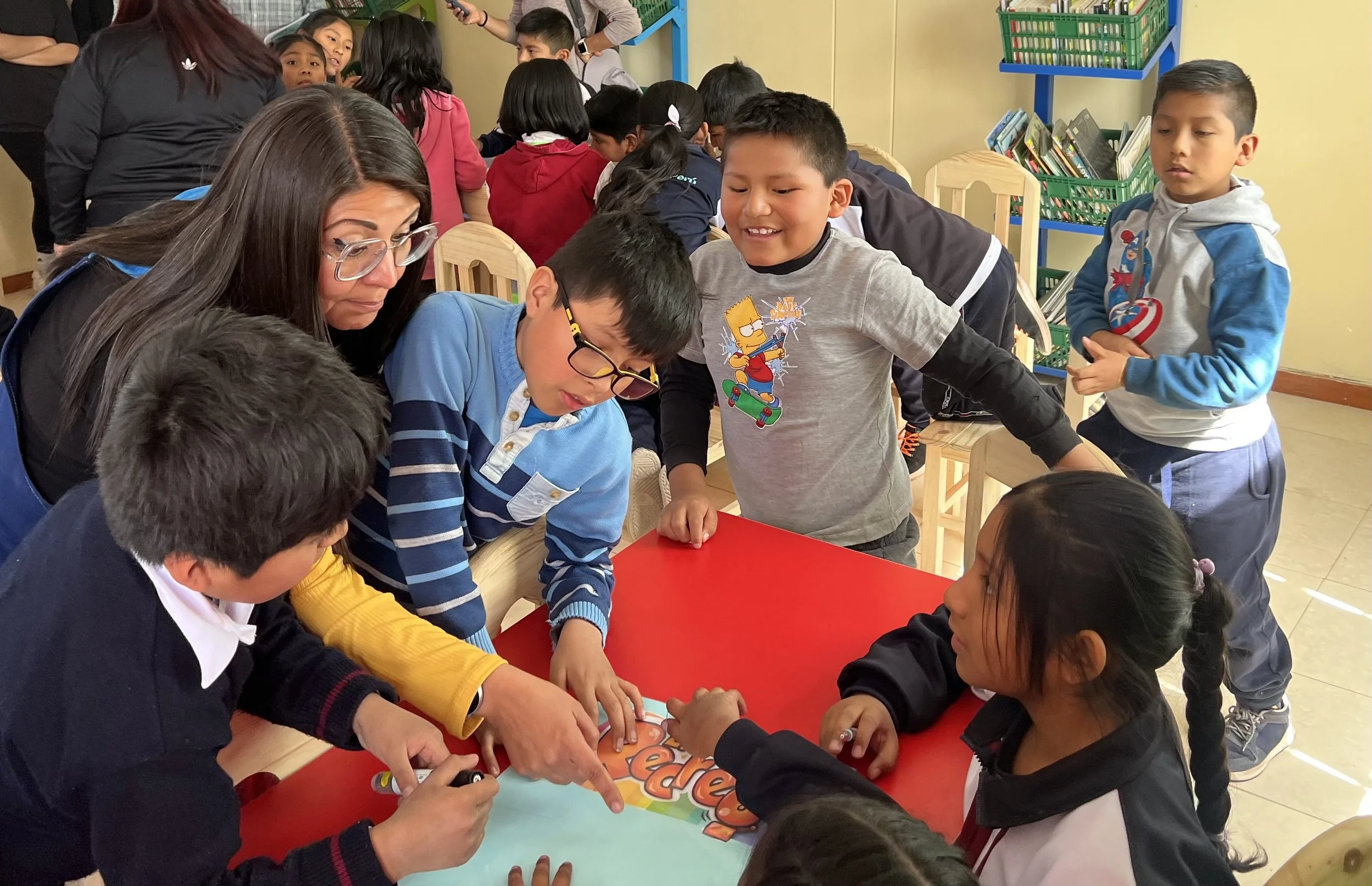
If you’ve read this newsletter for a while then you know all about Living Libraries. If you’ve ever come to visit Arequipa we’ve probably taken you to one of the schools that we’ve worked in to improve reading comprehension with kids by training teachers over the course of two years with new strategies and skills based on the science of reading. There have also been plenty of opportunities over the years to share about challenges and pushback—whether that be the simple fact that development in this area requires a lot of extra work from the teachers, or pushback to our methods which break the cultural norms of a more militaristic way of teaching. In the face of that pushback we maintain a humble, confident approach, trying to do all we can to help teachers overcome the obstacles, be they cultural or time-related, in order to be successful—all for the sake of the kids and because of Jesus and his reign.
This year, in the midst of a lot of success with many teachers locally and two new schools several hours outside of Arequipa who are doing a hybrid version of our program, we had two big setbacks. Two of our big schools have withdrawn from the program, each for their own reasons.
1. Last year a few teachers at the Murillo school where we were working with 24 teachers struggled mightily. They treated our team poorly on multiple occasions, and Paty and I along with Lucía met with the school principal, vice-principals, and library coordinators to try to reconcile. This year the plan had been to continue working with the teachers who had successfully completed the first year, but when the new school year came around (March), the teachers who had failed and withdrawn from the program had poisoned the commitment of the rest of the teachers, and the program there was no longer viable. Because 15 teachers completed the first year of the program, we left the majority of the books and the library modules so that the teachers could continue to apply what they’d learned and the girls (all girls school, over 700 girls!) there could continue to work with the books they had in their classrooms.
2. This year we took on a new school, Francois DeLatte, with their 12 teachers. Things were going really well the first couple of months, but when the teachers saw the nature and quantity of the work the Living Libraries program required of them, they requested that the workload be cut in half. Since our program is certified by the state of Arequipa (specifically, the Gerencial Regional de Education de Arequipa), we explained that we could not reduce the session requirements and maintain the viability of the program. So they withdrew from the program, breaking their working contract with us for two years, and forcing us to remove the library from the school in order to use it with teachers and children who will be participating in the program in the future.
Each of these situations represents hours and hours of investment of time, effort, and conversation over the course of months, doing all we can to inspire commitment over the long term for the sake of real change. Lucía as the director of education for CUDA, and Paty as our executive director, spent hours alongside the team trying to make things work. We lament where things ended up with these two schools and continue to do all we can throughout the entire process, including very specifically the onboarding process of new schools so that they know ahead of time what this program entails and are committed to seeing it through.
Because we are now working with 32 teachers weekly, instead of the 58 we were planning on working with at the beginning of the year, the team has been able to dedicate more time toward a couple of initiatives that we are hoping to implement in the near future. One of those is a developing relationship with two universities so that students can do student teaching hours shadowing our team and the teachers we work with so that education students can learn and specialize in the strategies that we teach at the beginning of their teaching careers. This is a huge new direction in order to get in on the front end of the teacher education process.
Another initiative is an alliance with the Mario Vargas Llosa library, where we hope to set up a children’s library (thanks to the books and shelves made available from one of the schools who withdrew from the program) and do reading sessions with teachers and kids who come on field trips from all over the city. Please pray for these two potential areas of growth because they represent for us very real possibility of multiplying our impact.
I am so proud of our Living Libraries team and more than a decade of work in schools. It’s a vision of justice, wellbeing, and joy for the city of Arequipa, the root of which comes from the life and ministry of Jesus and the impact of the reign of God seeping into new spaces. And thousands of kids are better off because of it.